
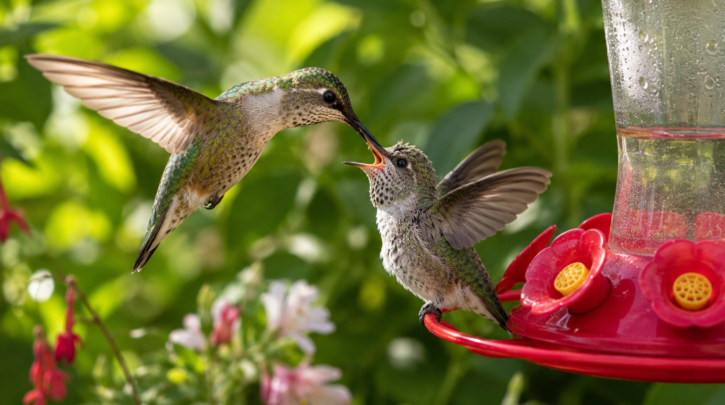

Summer is peak hummingbird season across most of North America — the highest feeder traffic, the most territorial disputes, active nests and fledglings, and the point where feeder maintenance genuinely needs to ramp up alongside the heat.
This site participates in affiliate programs. If you buy through a link on this page, we may earn a commission at no extra cost to you. Affiliate disclosure
Cleaning Schedule Shifts With the Heat
Nectar ferments significantly faster once temperatures climb, and the general guidance shifts from changing it every 3 to 4 days to every 1 to 2 days once conditions push past 90°F (32°C). This is the single most important seasonal adjustment to make, since spoiled nectar in hot weather is the leading preventable health risk covered in our diseases guide.
Peak Territorial Behavior
With the highest population density of the year and multiple broods overlapping, summer typically brings the most visible territorial squabbling at feeders. If a single dominant bird is monopolizing one feeder, adding a second feeder out of sight of the first — covered in our feeder guide — does more to reduce conflict than adding more ports to the same unit.
A camera feeder like the Birdfy Hum Feeder also makes it easy to tell whether one bird really is doing most of the guarding, since every visit is recorded.
Second Broods
Many females raise a second brood over the summer, sometimes reusing or rebuilding near the same nest site used for the first. This means nesting activity doesn’t wrap up after an early-summer batch of fledglings leaves the nest — a female actively raising a first brood in June may well be starting a second by July or August; see our nesting guide for how that timing plays out.
Fledglings Learning to Feed
Summer is when the year’s fledglings are most visible, perched near feeders and flowers while still being fed by a parent and gradually figuring out independent feeding. These juveniles can look confusingly similar to adult females; see our baby hummingbird guide for the behavioral tells that separate a young bird from a mature adult.
Watering Needs Increase
Hot, dry summer stretches make a water source — a mister or leaf-mister specifically, since standing basins don’t draw hummingbirds the same way — more valuable than in cooler months, both for bathing behavior and simply as a sign of active habitat nearby; see our water feature guide for setup options.
Insect Populations Matter More Now
With nesting activity at its peak, the protein demand from insects is at its highest point of the year, particularly for females feeding a second brood on top of their own energy needs. Avoiding pesticide use through summer specifically supports this window; see our feeding guide for how insects fit into the diet during peak breeding demand.
Traveling? Don’t Let the Feeder Run Dry
A feeder that runs empty for an extended stretch during peak summer heat doesn’t just disappoint visiting birds — it can leave regulars who’ve come to rely on it without an easy backup nearby. Arranging for a neighbor to refill during a vacation, or switching to a larger-capacity feeder during travel weeks, keeps a reliable resource in place through the highest-demand stretch of the year.
Heat Stress and Shade
Direct afternoon sun in peak summer doesn’t just spoil nectar faster — it can make a feeder uncomfortably hot to approach and drinking from it less appealing. Repositioning a feeder into partial afternoon shade for the hottest months, then back into more sun once temperatures ease in early fall, is a small adjustment that keeps a feeder performing consistently through the harshest stretch of summer weather.
A Simple Summer Checklist
- Shift to changing nectar every 1-2 days once temperatures pass 90°F
- Add a second feeder if territorial disputes are keeping other birds away
- Keep a mister or leaf-mister running through dry, hot stretches
- Skip pesticides to protect the insect supply chicks depend on
- Arrange feeder coverage if traveling during peak season
Why Summer Feels Different From Spring
The shift from spring to summer isn’t just warmer weather — it’s the difference between a yard with a handful of newly arrived birds establishing territory and a yard potentially supporting multiple overlapping broods, established territorial hierarchies, and the year’s highest sustained feeding demand all at once. The maintenance load genuinely increases along with the activity, which is worth planning for rather than being caught off guard by midsummer.
Treating the transition from spring to summer as a genuine shift in workload, rather than more of the same, is the single most useful mindset adjustment for this stretch of the year.