
Hummingbird nectar is simple: 1 part white granulated sugar to 4 parts water, nothing else. That single ratio covers the vast majority of feeding questions, but the details around it — what to avoid, how often to change it, and how much of a hummingbird’s diet is actually insects rather than nectar — matter just as much for keeping birds healthy and coming back.
This site participates in affiliate programs. If you buy through a link on this page, we may earn a commission at no extra cost to you. Affiliate disclosure
The Correct Nectar Ratio
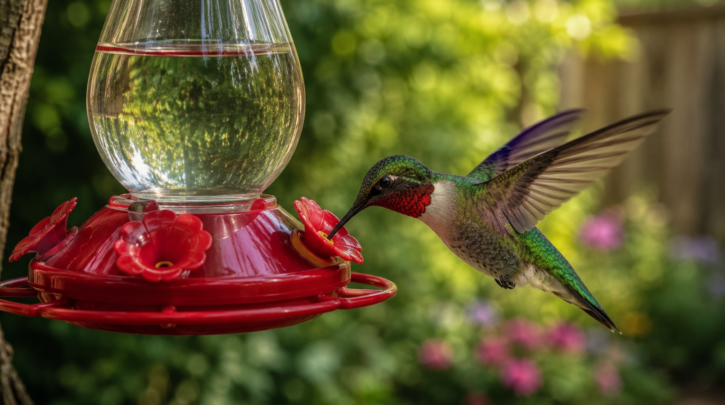
Mix 1 cup of white granulated sugar with 4 cups of water. Boiling the water isn’t strictly necessary if you’re using it quickly, but it does dissolve the sugar faster and extends how long the nectar stays fresh in the fridge before use. Let it cool to room temperature before filling a feeder. This 1:4 ratio approximates the sugar concentration found in the flowers hummingbirds naturally feed from, which is why it works so reliably compared to stronger or weaker mixes some sellers suggest.
What to Never Put in a Feeder
- Red dye — unnecessary and a needless risk; most feeders are already red, which is what actually attracts birds
- Honey — ferments quickly and can grow a fungus that’s fatal to hummingbirds; never a substitute for sugar
- Brown sugar, agave, or artificial sweeteners — wrong sugar composition or no nutritional value at all
- Fruit juice — ferments fast and attracts insects you don’t want swarming the feeder
Natural Food Sources: Flowers
In the wild, hummingbirds feed from tubular flowers in red, orange, and pink — colors they’re drawn to by sight rather than scent, since their sense of smell is weak. Native flowering plants provide a nectar source that doesn’t need refilling or cleaning, and they support the flower’s own pollination in return. See our plant guide for species that reliably attract them by region.
Insects Are the Other Half of the Diet
Nectar provides the carbohydrates that fuel a hummingbird’s extreme metabolism, but it has almost no protein, fat, vitamins, or minerals. Small insects and spiders — fruit flies, gnats, aphids, tiny caterpillars, and spiders taken directly from webs — fill that gap, and they become critical during nesting season, when females need much more protein to produce eggs and later feed chicks. A yard with no pesticide use and a healthy population of small insects is doing more for hummingbirds than the feeder alone ever could.
How Often to Change Nectar
Nectar ferments faster than most people expect, especially in hot weather. As a general rule, change it every 3 to 4 days in mild conditions and every 1 to 2 days once temperatures climb above 90°F (32°C). Cloudy nectar, visible mold, or a sour smell means it should be dumped immediately rather than topped off. See our feeder guide for models that make cleaning fast enough to keep up with that schedule.
Cleaning the Feeder Itself
A full nectar swap doesn’t help much if the feeder itself is dirty. Wash with hot water and, periodically, a diluted white vinegar solution rather than soap, which can leave a residue birds are sensitive to. A bottle brush or pipe cleaner gets into feeding ports where mold tends to collect first. Feeders with few parts and wide openings are dramatically easier to keep on this schedule than ornate designs that look nicer but take five minutes to disassemble.
Seasonal Demand Changes
Feeding demand isn’t constant through the season. It spikes in early spring when migrating birds are refueling after a long flight, again during nesting season when females need extra protein and calories, and once more in late summer and early fall as birds fatten up before migrating south. A feeder that gets emptied every day in August isn’t necessarily overcrowded — it may just be doing its job during peak pre-migration demand.
If you want to see those demand peaks for yourself, a camera feeder like the Birdfy Hum Feeder logs every visit to your phone, which makes it easy to spot when traffic spikes and when the feeder needs refilling.
Does Nectar Concentration Ever Need to Change
Some backyard birders adjust the ratio slightly stronger, closer to 1:3, right before major migration pushes, on the reasoning that migrating birds need denser fuel. There’s no strong evidence this meaningfully helps, and a significantly stronger mix can actually stress a hummingbird’s kidneys over time. The standard 1:4 ratio is what most wildlife rehabilitators and ornithological organizations recommend year-round, and it’s simpler to just keep one ratio in rotation rather than adjusting it seasonally.
Feeding Hummingbirds Without a Feeder
A feeder isn’t the only way to feed hummingbirds, and in some ways it’s not even the best one. A yard planted with the right tubular, nectar-rich flowers feeds birds without any cleaning schedule at all, and it supports the insect population that provides the protein half of their diet that a sugar-water feeder can’t. See our plant guide for the species that do the most work in that respect.
Signs a Hummingbird Isn’t Getting Enough
A hummingbird that looks visibly thin, is unusually lethargic at a feeder, or is feeding for unusually long, uninterrupted stretches may be struggling to find enough food, which sometimes happens during unexpected cold snaps or in areas where natural nectar sources have been cleared. Keeping a feeder reliably stocked during those stretches, rather than only when it’s convenient, is one of the more meaningful things a backyard birder can do for local birds.