
Fall is the highest-stakes feeding window of the year, not the winding-down period it might look like. Birds are fattening up for a genuinely dangerous migration, timing is driven by day length rather than weather, and the single most common mistake is taking a feeder down too early.
This site participates in affiliate programs. If you buy through a link on this page, we may earn a commission at no extra cost to you. Affiliate disclosure
Departure Timing by Region
Most ruby-throated hummingbirds begin heading south starting in August, with the majority gone from northern breeding grounds by early October, though individual timing varies by bird and region. Because migration is triggered primarily by day length rather than temperature, as covered in our migration guide, departure follows a fairly predictable calendar window each year regardless of how warm a particular fall happens to be.
Don’t Take the Feeder Down Early
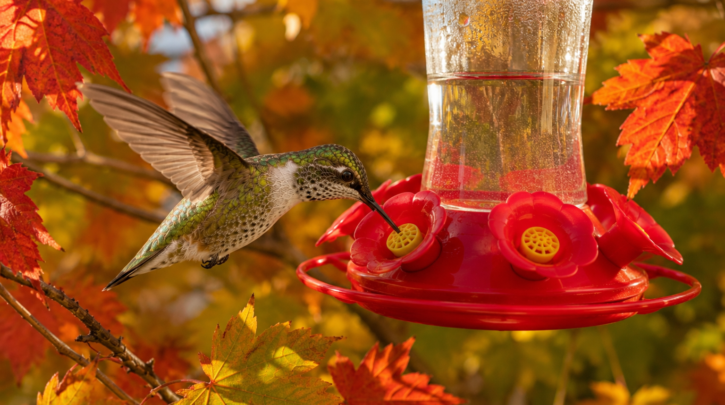
The most common and most avoidable mistake is removing a feeder as soon as regular local visitors seem to have left, on the assumption that an available feeder somehow delays migration. It doesn’t — a bird that’s ready to migrate leaves on schedule regardless of food availability. What an available fall feeder does provide is a critical refueling stop for later migrants passing through from farther north, who may still be weeks away from their own departure.
Keep It Up Two to Three Weeks Past the Last Sighting
A reasonable rule of thumb is leaving a feeder up for two to three weeks after the last locally-nesting bird appears to have left, specifically to catch these later migrants. In much of the US this means keeping feeders active into October, and in warmer southern regions, sometimes into November.
Peak Fattening Season
This is when birds are doing the most intensive feeding of the year, packing on 25 to 40 percent of their body weight in fat reserves to fuel the trip south, particularly ahead of long nonstop stretches like the ruby-throated Gulf crossing. A feeder that’s allowed to run dry during this window, even briefly, removes a resource at the exact moment demand is highest.
Watching for Stragglers and Late Migrants
A hummingbird showing up at a feeder well after the local nesting population has typically departed isn’t necessarily a sign something’s wrong — it may simply be a later migrant from farther north passing through on its own schedule. This is part of why the two-to-three-week rule matters more than reacting to when your specific regular visitors disappeared.
A camera feeder like the Birdfy Hum Feeder is a handy way to catch these late visitors, since it records every stop even when you’re not watching and identifies each bird automatically.
Late-Season Flowers Still Help
Fall-blooming plants like agastache extend natural nectar availability further into the season than earlier-blooming species, which is genuinely useful during the fattening window covered above. See our plant guide for species that keep blooming into early fall rather than finishing by midsummer.
What Happens After They Leave
Once the last migrants have passed through and a couple of weeks have gone by without a sighting, it’s reasonable to clean and store the feeder for winter — except in regions covered by our winter hummingbird guide, where resident or overwintering birds mean feeders stay up year-round instead.
Cleaning and Storing a Feeder for Winter
Before storing a feeder for the season, give it a full wash rather than just emptying it, since any leftover residue can dry into a harder-to-remove problem over months of storage. Fully drying all parts before packing them away also prevents mold from developing in an enclosed container over winter, which saves a much bigger cleaning job the following spring.
A Simple Fall Checklist
- Keep the feeder clean and full through peak fattening season in late summer and early fall
- Don’t take it down at the first sign local regulars have left
- Watch for late migrants for another two to three weeks past that point
- Fully clean and dry the feeder before winter storage once migration wraps up
- Check whether your region falls under overwintering or vagrant patterns before storing — see the winter guide if so
Why Fall Deserves More Attention Than It Gets
Fall often gets treated as an afterthought compared to the excitement of spring arrivals, but the actual stakes for an individual bird are considerably higher during fall fattening and departure than during the relatively lower-pressure spring settling-in period. Giving fall feeding the same attention as spring setup, rather than letting it quietly wind down, genuinely matters for the birds passing through during the riskiest leg of their year.
A feeder kept clean and full through October costs almost nothing extra compared to one taken down in August, and the difference for a late migrant can be significant.