
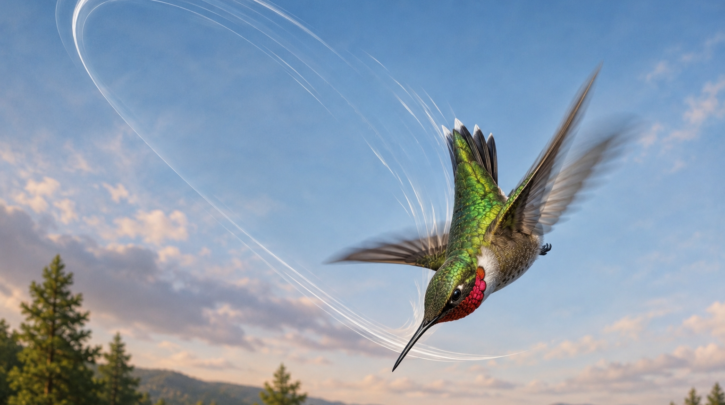

The wing hum that gives hummingbirds their name is only one of several distinct sounds they make, and a surprising number of the most dramatic ones — including the loud chirp at the bottom of a courtship dive — aren’t vocal at all. They’re produced mechanically, by air moving through modified feathers at high speed.
The Wing Hum
The signature humming buzz comes directly from wingbeat frequency — most North American species beat their wings 50 to 80 times per second in normal flight, fast enough that the individual beats blur into a continuous tone rather than a series of distinct wingbeats. Pitch and volume vary somewhat by species and flight speed, which is part of why experienced birders can sometimes identify an approaching hummingbird by sound alone before it comes into view.
Vocal Chip Notes and Chatter
Beyond the wing hum, hummingbirds do have true vocal calls — short, high-pitched chip or tick notes used regularly, and a rapid chattering series typically heard during territorial disputes or when one bird is chasing another off a feeder. These calls are simple compared to a songbird’s repertoire, but they’re distinct enough between species that field guides often describe a specific call pattern as a secondary identification clue alongside plumage; see our identification guide for how sound fits into the broader ID picture.
The Courtship Dive Chirp
Several species, including Anna’s hummingbird, perform a dramatic courtship display dive from considerable height, pulling up sharply near the bottom with a loud, sudden chirp — and that chirp is produced mechanically by air rushing through specially shaped tail feathers at the peak speed of the dive, not by the bird’s voice. It’s one of the more striking examples of a bird using its body as an instrument rather than vocal cords to produce a signal sound.
The Broad-Tailed Wing Trill
Male broad-tailed hummingbirds produce a distinctive metallic trilling sound in normal flight, caused by air moving through modified, narrowed outer wing feathers rather than any vocalization. It’s audible enough that experienced birders in the Rockies often identify a broad-tailed male by that trill before spotting the bird itself, and it’s present only in flight, disappearing entirely when the bird is perched.
Why So Many Sounds Are Mechanical, Not Vocal
Hummingbirds are small enough, and their flight demands are extreme enough, that producing loud, complex vocal songs the way many other birds do would compete directly with the sheer physical requirements of hovering flight. Relying on feather-generated sound during flight and reserving vocal calls for simpler, shorter signals appears to be a workaround that fits their unusual flight-dominated lifestyle better than a conventional bird song would.
Using Sound to Confirm a Species
Sound alone rarely nails down an exact species with full confidence, but combined with range, season, and visual field marks, a distinctive call or wing sound can break a tie between two visually similar species — broad-tailed versus black-chinned in overlapping Rocky Mountain range, for example, where the trill is present on one and absent on the other regardless of how the light is hitting the gorget.
Recording Sounds With a Camera Feeder
Smart camera feeders with audio capture, including the Birdfy Hum Feeder, pick up wing sounds and chip notes along with video, which turns a fleeting sound heard in passing into something you can replay and actually study. Over a season, that record can reveal patterns — which individual birds are most vocal, when chatter spikes during territorial disputes — that are easy to miss in the moment.
Hear and see every visit, not just catch a glimpse See the Birdfy Hum Feeder
Sounds That Aren’t From Hummingbirds At All
Several sphinx moth species, sometimes called hummingbird moths, hover at flowers with audible wingbeats that can sound remarkably similar to a hummingbird at a glance or a quick listen, especially at dusk when moths are most active. Learning the difference between a moth’s wingbeat and an actual hummingbird’s hum takes some practice, but proximity and flower choice — moths favor a wider range of flower shapes — are usually a faster tell than sound alone.
Regional Calls Worth Learning
If only one species breeds in your area, as is the case for most of the eastern US with ruby-throated hummingbirds, learning that single species’ chip note is a fast way to notice a bird’s presence before it comes into view, especially in denser plantings where sightlines are limited. In regions with several overlapping species, sound is less of a shortcut on its own but still useful for confirming activity in a general area worth a closer visual check.