
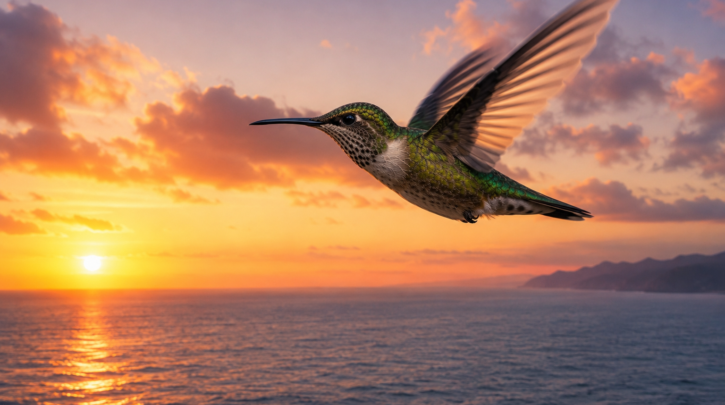

Hummingbird migration is driven by day length, not temperature, which is why birds start moving south on a predictable calendar schedule even during a warm fall. The scale of the trip varies enormously by species — some, like Anna’s hummingbird, barely migrate at all, while rufous hummingbirds complete one of the longest migrations relative to body size of any bird on Earth.
What Triggers Migration
Photoperiod — the changing length of daylight through the seasons — is the primary cue that tells a hummingbird’s internal clock when to start preparing to migrate, well ahead of any actual drop in temperature or food availability. This is why leaving a feeder up late into fall doesn’t delay or prevent migration: a hummingbird that’s ready to go leaves on schedule regardless of how well-stocked the nearest feeder is.
Fueling Up Before the Trip
In the weeks before migration, hummingbirds enter a period of intense feeding that can add 25 to 40 percent of their body weight in fat reserves, fuel that gets burned through directly during long flight stretches with no chance to feed. This is the single highest-stakes feeding period of the year; see our feeding guide for keeping a feeder reliably stocked through late summer.
The Ruby-Throated Gulf Crossing
Ruby-throated hummingbirds migrating between the eastern US and Central America face a genuine geographic obstacle: roughly 500 miles of open water across the Gulf of Mexico. Many make that crossing in a single nonstop flight lasting 18 to 24 hours, relying entirely on fat reserves built up beforehand since there’s nowhere to land and refuel partway across. Others take a longer overland route around the Gulf via the Texas coast, which avoids the crossing at the cost of a longer overall trip.
Rufous Hummingbird’s Extreme Migration
Rufous hummingbirds breed as far north as Alaska and southern Canada and winter in central Mexico, a round trip of roughly 3,900 miles that’s frequently cited as the longest migration relative to body size of any bird species. Rather than a direct north-south line, many rufous hummingbirds follow a looping route — north along the Pacific Coast in spring, south through the Rocky Mountains in fall — to take advantage of different regions’ peak wildflower bloom at different times of year.
Timing by Region
Ruby-throated hummingbirds typically reach the Gulf Coast in March, arrive in the northern US and southern Canada by mid-to-late May, and begin heading south again starting in August, with most gone from northern breeding grounds by early October. Western species follow broadly similar patterns adjusted for their specific range, though Anna’s hummingbirds along the immediate Pacific Coast are a notable exception, remaining resident through winter in many areas rather than migrating south at all.
Solitary Travelers, Not Flocks
Unlike geese or many songbirds, hummingbirds migrate alone rather than in flocks, and they travel during the day at relatively low altitude, stopping to refuel at flowers and feeders along the route rather than flying one long unbroken stretch except across genuine barriers like the Gulf. This means the same individual bird may pass through the same backyard feeder on both the spring and fall legs of its migration, refueling on a route it may return to year after year.
When to Take Down a Feeder
Keeping a feeder up two to three weeks after the last hummingbird sighting is generally recommended rather than taking it down the moment regular visitors seem to leave, since it provides a safety-net refueling stop for later migrants passing through from farther north. As covered above, an available feeder does not delay a bird’s own migration schedule, so there’s no real downside to leaving one up into early fall.
Return Trip in Spring
The spring migration north generally moves faster than the fall trip south, since birds are racing to establish breeding territory ahead of competitors rather than traveling at a more relaxed post-breeding pace. Males typically arrive on breeding grounds first, a pattern seen across many migratory bird species, staking out territory before females arrive so mating and nesting can begin as soon as conditions allow.
Weather Risk During Migration
Unseasonable cold snaps or storms during migration are a genuine hazard, particularly for birds arriving early in spring before reliable natural nectar sources have bloomed. A feeder kept stocked during an unexpected late-season cold spell can provide a critical resource for early arrivals with no other food source available, which is one of the more direct ways backyard feeding measurably helps migrating birds survive the riskiest part of their year.